A global movement · Any land · Any culture · Any terrain

Wōžu is not
a place.
It is a practice.

Land-based healing for any community that was severed from its roots — on prairies, in forests, on islands, in mountains, in cities, under arctic sky.
Open Model
First Nations
Coastal Communities
Urban Neighborhoods
Arctic Villages
Island Peoples
Forest Keepers
Desert Nations
Explore
The wound beneath every wound

What colonization, industrialization,
and displacement have in common:
they all severed us from land.

Addiction, depression, chronic illness, violence, houselessness — these are not random. They cluster wherever human beings have been removed from their land, their ceremony, their ancestral foodways, and their felt sense of place. It doesn't matter which continent. It doesn't matter which century. The wound is the same.

"The nervous system was never designed to heal without soil under its hands, sky overhead, and people who need it nearby. That is not a metaphor. It is neurobiology."
1B+
People living with mental health conditions
WHO identifies it as the leading cause of global disability — and the treatment gap is widening, not closing. The clinical model was not built to reach them.
93%
Of time spent indoors in industrialized nations
The average person in a modern city has near-zero daily contact with soil, seasonal rhythm, or living ecosystem. Disconnection from land was not chosen. It was built.
476M
Indigenous people globally — disproportionate crisis rates
From the Amazon to Alaska, from Pacific islands to sub-Saharan savannas — communities severed from ancestral land show the same predictable mental health, addiction, and poverty outcomes.
0
Land-based healing models that scale globally
Traditional healing knew what the research now confirms. But no scalable, replicable framework has existed to carry that wisdom forward in any terrain, any culture, with community sovereignty intact.
What is Wōžu

A replicable model for
returning human nervous systems
to their ecological home.

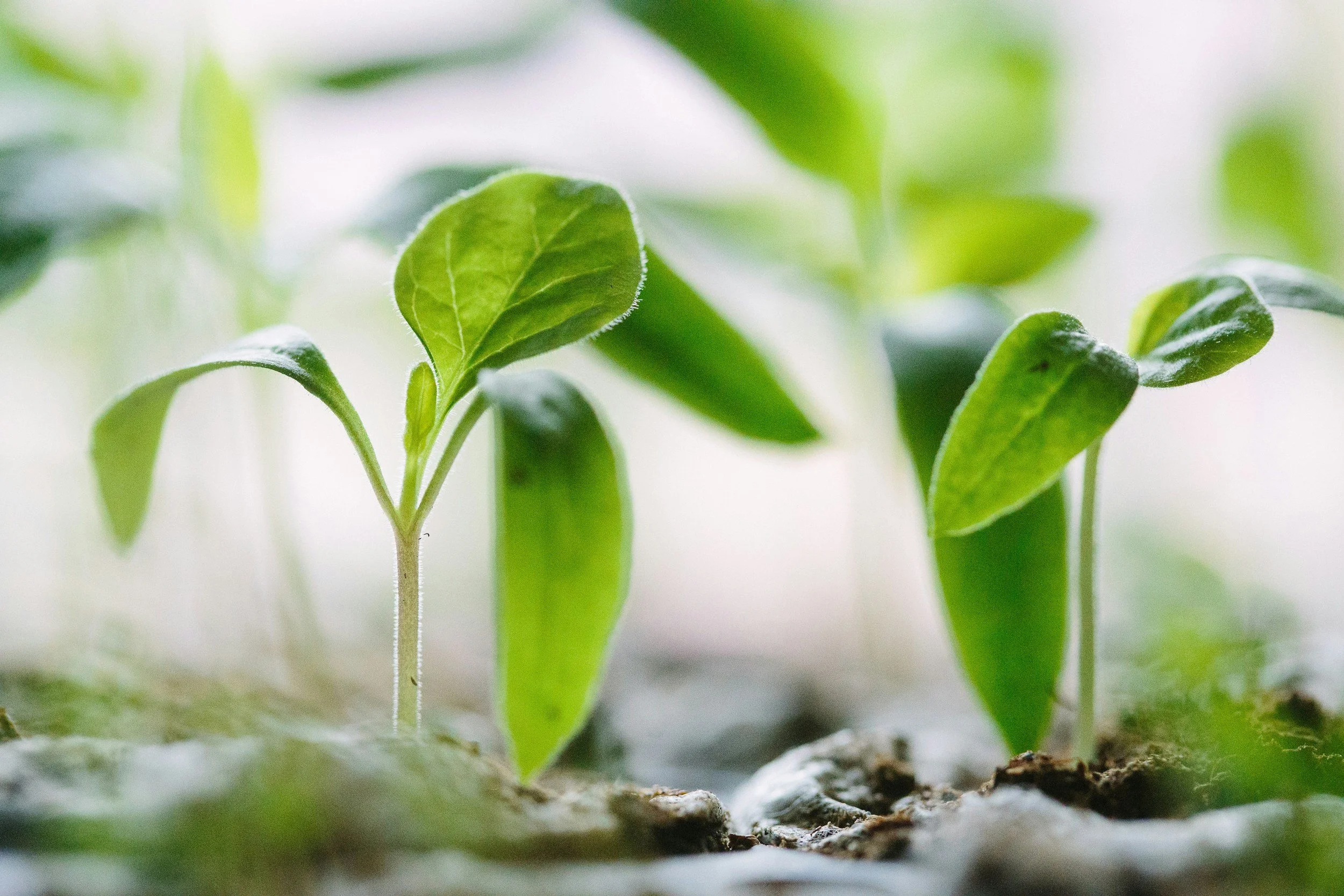
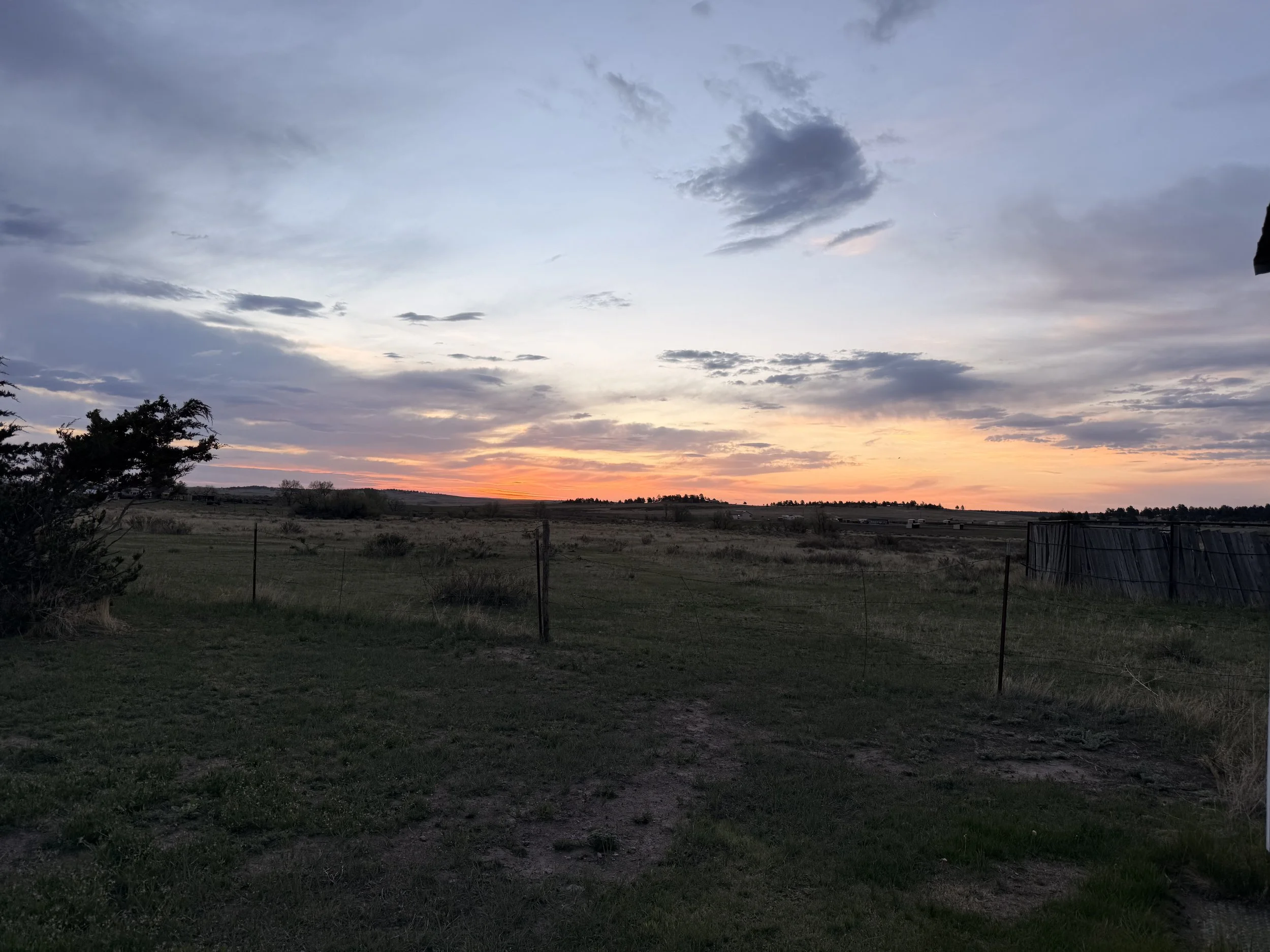
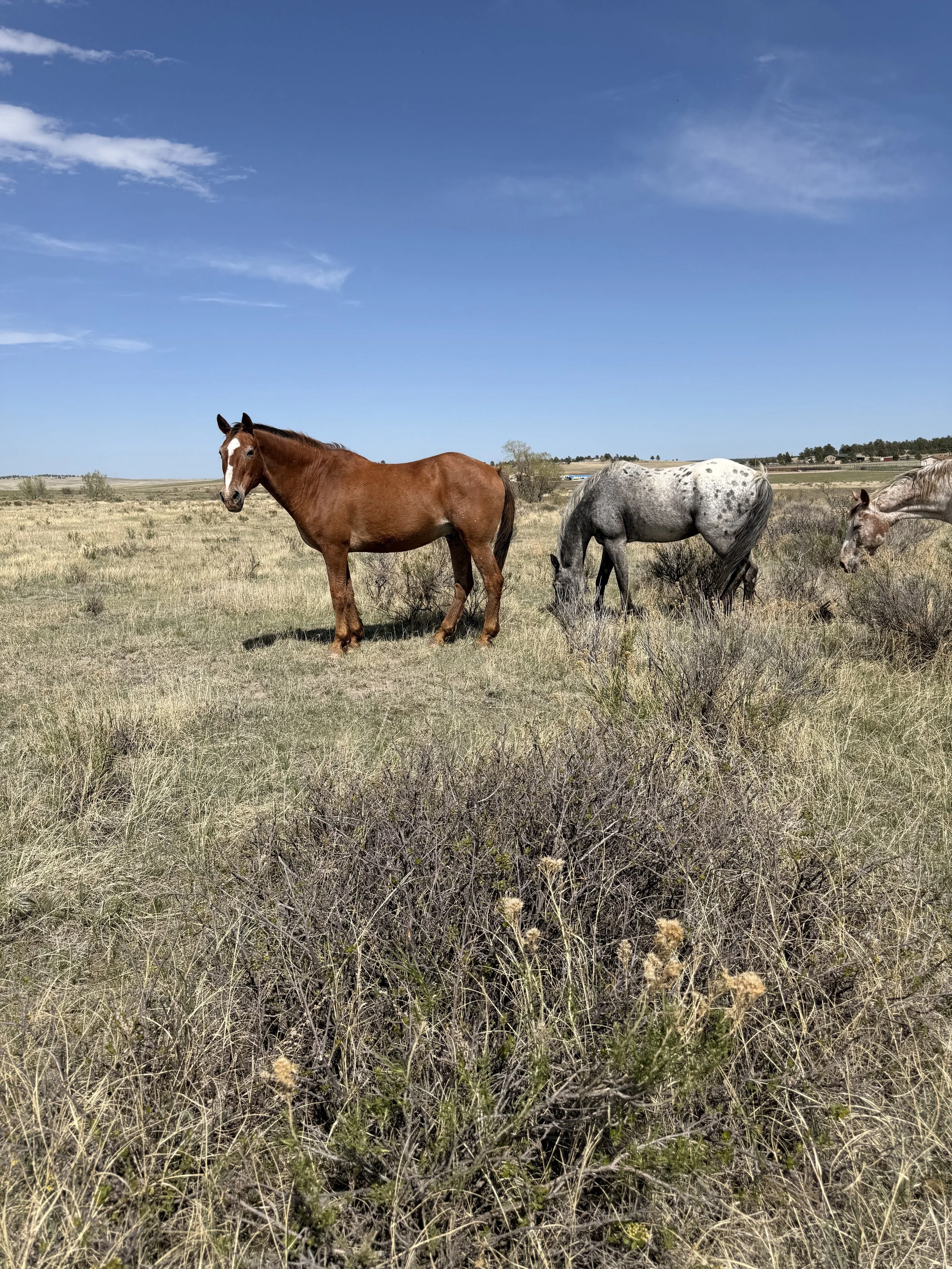
Wōžu (Lakota: to plant, to sow) began on 65 acres of Colorado prairie at Star Bear Ranch in Elbert. But the name was always bigger than that address. The question it asks can be answered anywhere: What does it look like when a community heals by returning to its land?

Wōžu is a living framework for land-based community healing — combining somatic science, ancestral wisdom, economic sovereignty, and regenerative land stewardship into a single integrated model that any community can adapt to its own terrain, culture, and needs.
🌱
Land-rooted, not building-based
The healing happens through relationship with a specific place — its soil, its seasons, its ecology. The land is the therapist. The program is the container.
🧬
Neurobiologically grounded
Every practice is mapped to documented neurobiological mechanisms — not folklore, not inspiration, not "wellness." Measurable outcomes. Replicable science.
🏛️
Community sovereign
No outside organization owns the model locally. Each Wōžu site is led by and belongs to its community. The framework is open. The land is theirs.
♾️
Self-sustaining by design
Each site is built to become economically independent — generating revenue through the land itself rather than depending on grants or institutional funding indefinitely.
The model in any biome

This is not a farm program.
It is a framework for anywhere
people belong to land.

The core of Wōžu — land contact, communal labor, ceremony, ancestral foodways, earned income, visible agency — translates across every biome. The form changes. The mechanism doesn't.

🌾
Prairie & Farmland
Great Plains · Midwest · Pampas · Steppe
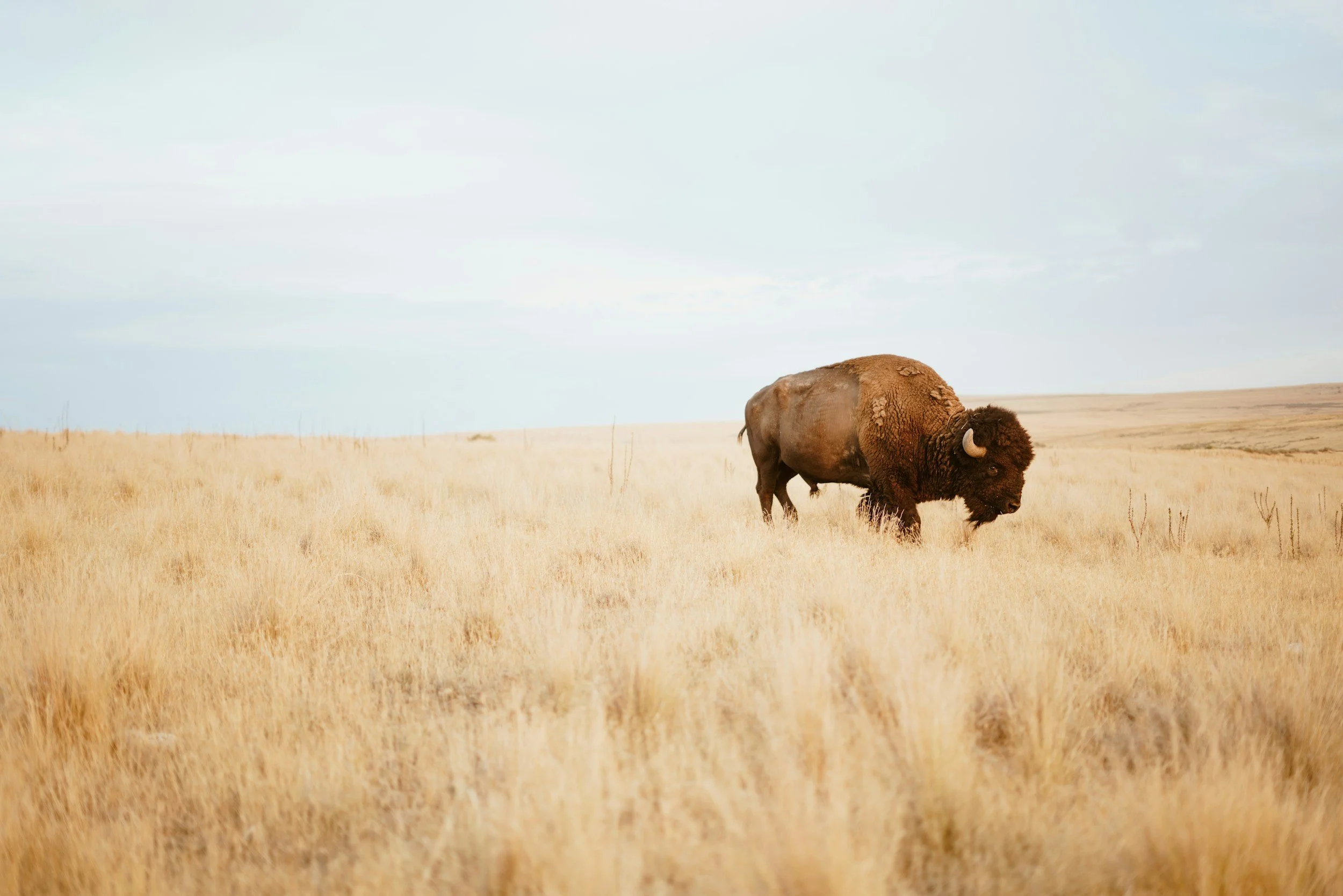
Soil cultivation, regenerative agriculture, animal program and rotational grazing, food forest development, prairie restoration. The original Wōžu template — 65 acres at Star Bear Ranch in Elbert, Colorado is the living prototype.
Soil MedicineHarvest LoopPrairie CeremonyFood Sovereignty
🌲
Forest & Woodland
Pacific Northwest · Amazon · Appalachia · Scandinavia · Borneo
Forest tending, mycological cultivation, timber framing, medicinal plant harvesting, canopy ceremony spaces. Forest communities already hold the knowledge — the framework scaffolds it.
Canopy WorkMyco-MedicineElder KnowledgeForest Bathing
🌊
Coastal & Marine
Pacific Islands · Alaska · Māori · Southeast Asia · West Africa
Aquaculture, seaweed cultivation, coastal restoration, traditional fishing practices, tidal ceremony. Coastal peoples whose relationship with ocean was severed by commercial extraction and climate displacement.
AquacultureTidal CeremonySea MedicineMarine Stewardship
🧊
Arctic & Subarctic
Alaska · Northern Canada · Greenland · Siberia · Sámi Territory
Ice and tundra medicine, traditional subsistence practices, reindeer and caribou culture, permafrost ecological literacy, cold-season ceremony and survival knowledge. Communities whose land is literally disappearing under climate collapse.
Tundra StewardshipSubsistence RevivalIce KnowledgeCold Ceremony
🏝️
Islands & Archipelagos
Hawaiʻi · Caribbean · Philippines · Pacific · Canary Islands
Agroforestry, traditional crop revival (taro, breadfruit, yam), reef and wetland restoration, ancestral navigation and star knowledge, hurricane-resilient food systems. Islands carry the deepest land-memory and the most acute climate urgency.
AgroforestryReef CeremonyAncestral CropsClimate Resilience
🏜️
Desert & Arid Land
Southwest US · Sahel · Negev · Atacama · Central Australia
Dryland farming, rainwater harvesting, indigenous water knowledge, sacred site stewardship, desert ceremony and astronomical tradition. Arid land communities hold some of the oldest and most threatened ecological knowledge on Earth.
Dryland FarmingWater CeremonySacred SitesDesert Medicine
⛰️
Mountain & Highland
Andes · Himalayas · Appalachia · Atlas · Ethiopian Highlands
Terrace agriculture, high-altitude medicinal plants, pastoral traditions, glacier stewardship, altitude ceremony. Mountain communities globally have been displaced by extractive industries — mining, logging, tourism — with catastrophic cultural and health outcomes.
Terrace GrowingAlpine MedicineGlacier CeremonyPastoral Healing
🏙️
Urban & Peri-Urban
Detroit · Chicago · London · Lagos · São Paulo · Bangalore
Urban food forests, rooftop cultivation, community garden networks, vacant lot transformation, guerrilla greening. Cities concentrate the people most severed from land — and have the greatest density of both wound and potential.
Urban ForestCommunity GardensSoil RevivalNeighborhood Ceremony
The three constants

The terrain changes.
The mechanism doesn't.

Every Wōžu site, regardless of biome or culture, activates the same three healing mechanisms. These are not program components. They are biological facts about human nervous systems.

01
Land Contact
Direct, repetitive, purposeful engagement with a specific piece of living earth — soil, water, forest, reef. Not nature walks. Not therapy outdoors. Working the land with your hands, in community, for the land's benefit and yours simultaneously.
02
Cultural Ceremony
Each site is rooted in its own ancestral and cultural traditions — not a generic "healing program." The ceremony, the language, the ecological knowledge, and the relational protocols are led by and belong to the community the site serves.
03
Economic Sovereignty
Every site is designed to generate its own income through the land — food, products, services, events. Not charity. Not grants indefinitely. A self-reinforcing economy rooted in what the land produces and what the community knows how to do.

These three together create what no clinic, program, or supplement can replicate: a life that heals as you live it.

The science — mechanism, not metaphor

Working land with your hands
literally rewires the brain.

This is not wellness marketing. This is peer-reviewed neurobiology. The specific acts of tending soil, building with your hands, growing food, and working in community activate documented biological pathways that repair exactly what colonization, displacement, and industrialization damage.

The core finding

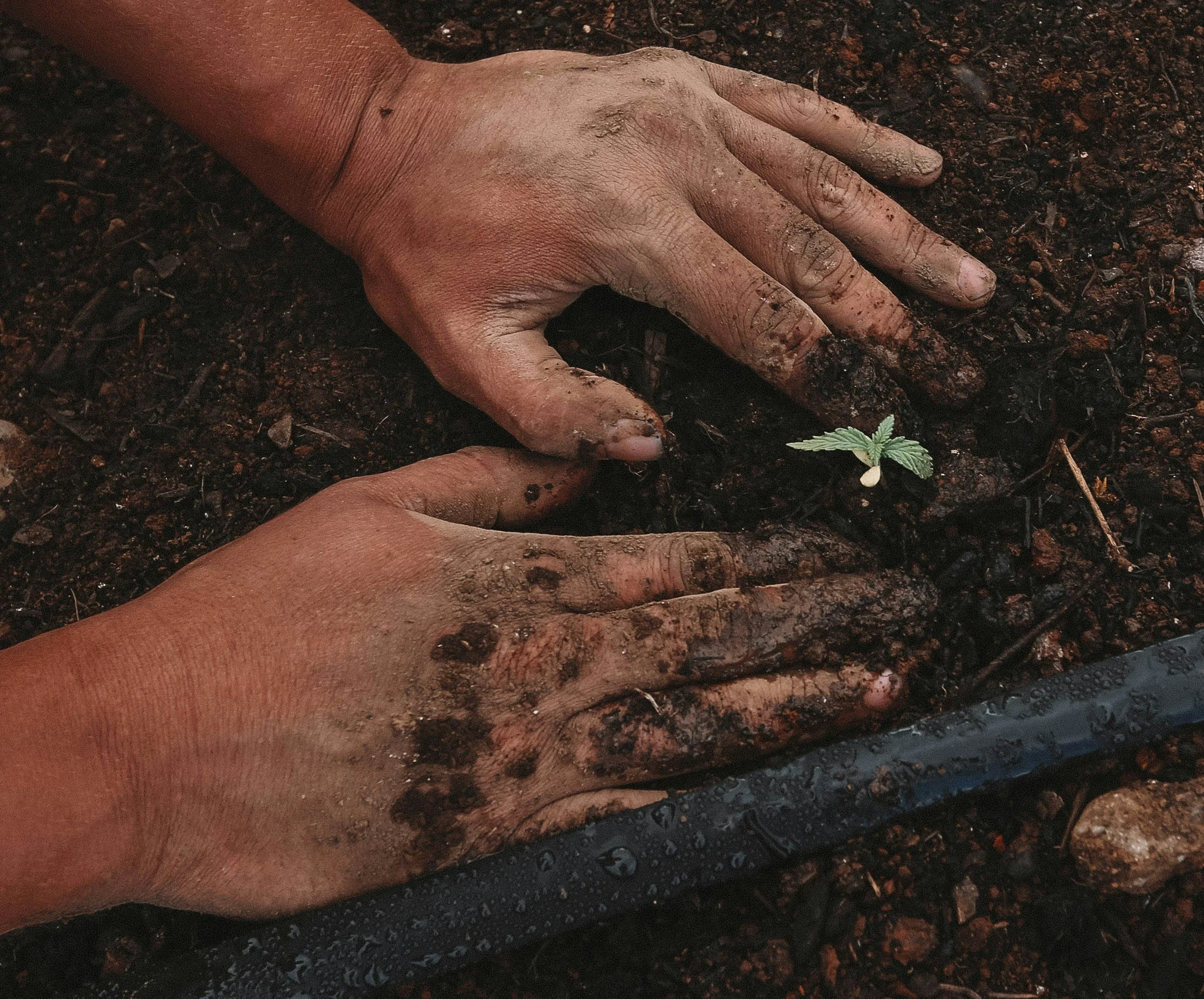
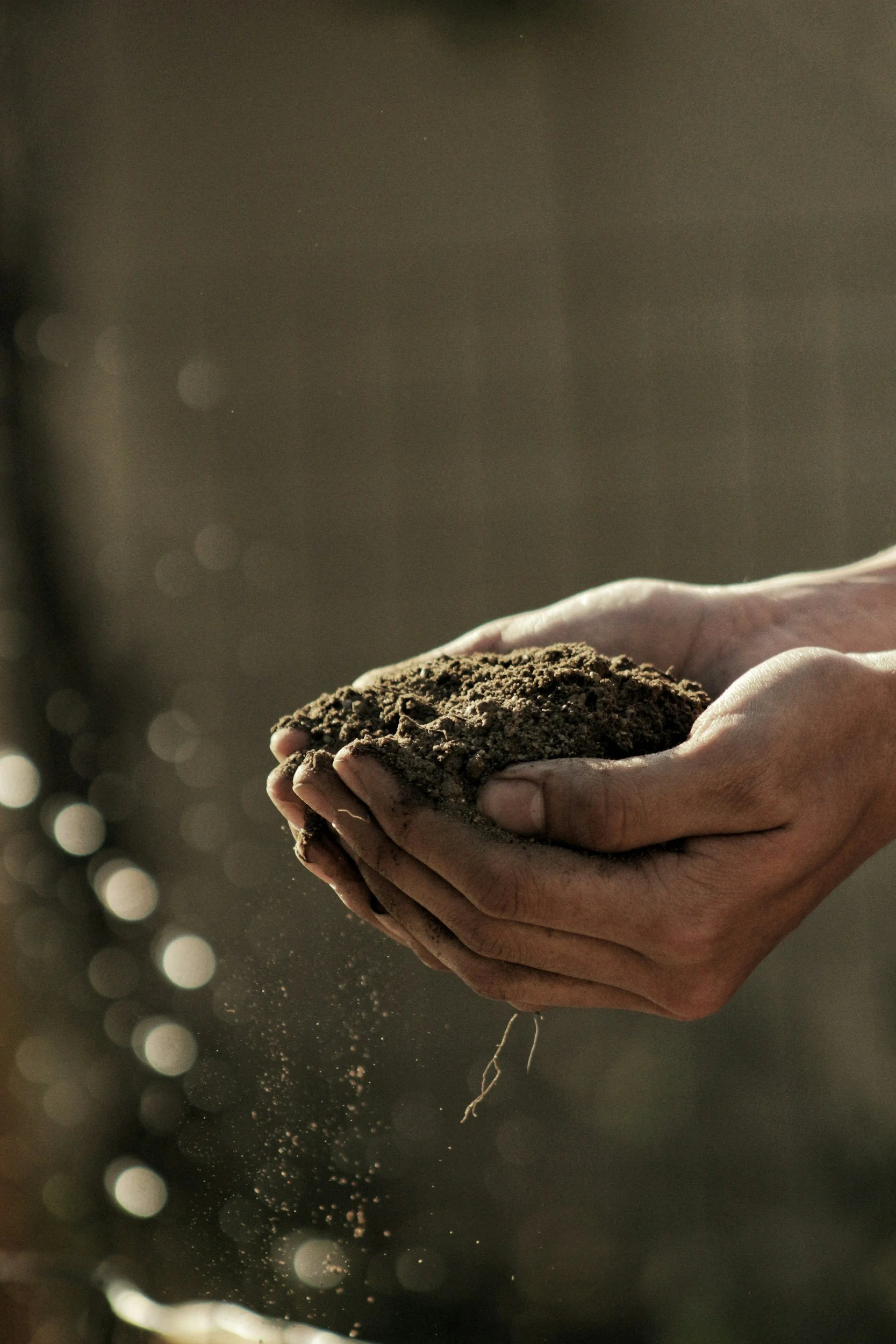
Mycobacterium vaccae — a bacteria naturally present in healthy soil — stimulates cytokine production, triggering serotonin release through the same neural pathways as antidepressant medications. You don't need a prescription. You need bare hands in living soil. This works in any soil on Earth. — University of Colorado Boulder, 2007; confirmed in multiple subsequent studies.

🧠
Neuroplasticity through repetition
Repetitive manual work — planting, building, harvesting, mending — activates neural networks responsible for concentration and emotional regulation. Slow, rhythmic physical tasks build new grooves in the brain. The brain changes through daily practice, not peak experiences.
Horticultural Therapy & Neuroplasticity Research
⚗️
Soil contact raises serotonin
Contact with soil microorganisms measurably increases serotonin and reduces cortisol. 30 minutes of gardening reduces cortisol more than 30 minutes of indoor therapy. Soil exposure increases BDNF, VEGF, and PDGF — all essential for brain growth and resilience. The soil is a prescription. In any biome.
PMC/NIH, 2022 · University of Colorado Lowry Lab
🫀
Parasympathetic activation
The repetitive movements of tending, building, and harvesting — without time pressure, without threat — activate the parasympathetic nervous system. This is the system that a chronically traumatized nervous system cannot access alone. Land work opens a door the body has been unable to open.
Horticultural Therapy Research · Multiple peer-reviewed studies
🌾
Harvest activates the reward system
Harvesting food triggers dopamine in the brain's reward center — the same system that addiction hijacks. Growing and eating what you grew provides a clean, self-reinforcing loop that directly competes with substance-seeking behavior. This mechanism works whether the harvest is salmon, rice, taro, or wheat.
Evolutionary Biology of Reward · Growing Spaces Research
👁️
Visible proof of agency
A seedling you planted becomes food. A wall you built stands. A reef you tended recovers. For a nervous system conditioned by powerlessness, visible proof that your actions change the world is neurologically transformative. Agency is not a mindset. It is a felt biological experience that builds new neural infrastructure.
Self-Efficacy and Neuroplasticity Research
🌍
This is why traditions worked
Indigenous land-based practices were not primitive. They were neurologically sophisticated. Seasonal ceremony, communal construction, daily soil contact, ancestral foodways — these maintained exactly the biological conditions the research now describes. Colonization didn't just take land. It took the nervous system's operating system.
Neurocolonization Framework · Chasing Consciousness
The healing loop — universal wounds, land-based responses

Every wound has a
land-based response.

These wounds are not unique to any culture or any geography. They appear wherever humans have been severed from land. And in each case, the land-based response is not a program — it is a biological mechanism that reaches the root.

The universal wound
Substances as nervous system regulation
Alcohol, opioids, stimulants, and kava abuse don't appeal to people living full, regulated, purposeful lives. They appeal to nervous systems in chronic distress — systems that have no other reliable path to relief. This pattern appears identically in Lakota communities in South Dakota and Māori communities in New Zealand. The substance differs. The neurobiology doesn't.
Dysregulation precedes use — substances are a solution to an unsolved biological problem
Clinical treatment without changing conditions has limited long-term effect globally
The nervous system needs something better to move toward, not just something removed
The land response
Soil creates serotonin. Harvest creates dopamine. Work creates agency.
The land provides the biological substrate that substances simulate — but sustainably, through the body's own systems. This is true whether the land is arctic tundra, Pacific reef, prairie, or forest. Soil bacteria, harvest cycles, and physical labor activate the same reward pathways in every human nervous system on Earth.
M. vaccae in healthy soil activates serotonin pathways — globally consistent
Harvest cycles provide dopamine loops that directly compete with substance-seeking
Visible results rebuild felt agency — the experience that makes alternatives sustainable
The universal wound
Loneliness as a global epidemic
The U.S. Surgeon General declared a loneliness epidemic in 2023. The WHO identifies social isolation as a critical global health crisis. Human nervous systems evolved for communal living over hundreds of thousands of years. Industrialized social organization — nuclear families, isolated apartments, digital substitution — is a radical historical experiment with catastrophic outcomes.
Chronic isolation is equivalent in health impact to smoking 15 cigarettes a day
Urbanization concentrated people geographically while atomizing them socially
Service-based models create appointments, not belonging
The land response
Belonging built through shared labor, shared land, shared harvest.
The garden creates community the way humans have always created it: through shared work toward a shared purpose. Whether that work is harvesting taro in Hawaiʻi, mending nets in coastal Alaska, or building greenhouse beds in Colorado — shared labor is the oldest and most reliable human social technology. It cannot be replicated in a support group.
Shared labor creates trust through interdependence, not conversation
Communal meals from grown food rebuild the relational rituals that belonging requires
A working cooperative gives every person a role the community needs them to fill
The universal wound
Intergenerational and collective trauma stored in the body
Talk therapy addresses cognitive understanding of trauma. It does not, alone, discharge the stored physiological activation that trauma leaves in the body. The ACE research, repeated across every continent, shows the same thing: the nervous system encodes threat responses that outlast conscious processing. Every formerly colonized community in the world carries collective ACE scores in the stratosphere.
The nervous system encodes threat responses that persist beyond conscious understanding
Environmental cues retrigger stored activation — insight doesn't resolve this
Sustained felt safety — not therapeutic insight — is required for the nervous system to begin completing the trauma cycle
The land response
The body heals in safety. Land builds the safety no clinic can provide.
Wōžu sites combine somatic trauma healing through the Capacity Care curriculum with daily land work that naturally activates the parasympathetic nervous system. Rhythmic physical labor — tending, building, harvesting — allows the nervous system to complete cycles it has held for generations. Safety is not declared. It is built, daily, through the land. In any terrain.
Rhythmic movement in safe, predictable environments activates the parasympathetic system
Ceremony provides structured collective containers for grief and transformation
Two or more years of sustained safety gives the nervous system time to reorganize — not just cope
The universal wound
Cultural erasure and disconnection from ancestral place
When a community's language, ceremony, foodways, and ecological knowledge are severed — by colonization, forced relocation, or urbanization — the identity of its members floats without anchor. Not knowing who you are in relationship to land, lineage, and community is not a philosophical problem. It produces measurable nervous system dysregulation and predictable health outcomes.
Identity rooted in relationship to land is one of the most stable forms of nervous system regulation
Cultural erasure is documented to produce the same neurobiological outcomes as childhood neglect
No clinic can provide a sense of ancestral belonging — that can only be rebuilt through practice
The land response
Identity rebuilt through practiced relationship with a specific living place.
Wōžu sites are not generic healing centers. They are built around the specific ancestral knowledge, language, ceremony, and ecological relationship of the community they serve. Working the land in the traditional way — even a revived or reconstructed version of it — rebuilds identity through embodied practice. You do not think your way back to your people. You work your way back.
Elder-led ceremony and ecological teaching reconnect knowledge chains broken by colonization
Language revival integrated into daily land practice encodes culture in the body, not just the mind
Seasonal rhythms rebuild the biological relationship to place that identity requires
The universal wound
Economic despair as a health crisis
Poverty is not simply a lack of money. It is chronic physiological threat — the same stress response as physical danger, running continuously, degrading every biological system it touches. Communities dispossessed of their land, then denied economic access, carry poverty as a nervous system condition. The body cannot distinguish financial precarity from predator threat. It responds the same way.
Chronic financial stress produces measurably the same cortisol patterns as post-traumatic stress
Economic despair is a primary driver of addiction, family disruption, and health deterioration
Aid and charity address symptoms — they do not rebuild economic agency or self-determination
The land response
Income from the land itself — earned, not granted.
Every Wōžu site is designed to generate earned income through the land — food, products, services, events, education, ecological stewardship. The nervous system requires felt agency, not just material provision. Earning from the land you tend creates a loop that is biologically distinct from receiving charity: the body registers it as self-determination. That registration matters. Profoundly.
Earned income activates different neurological pathways than received aid
Land-based economies can generate $300K–$1.2M+ annually at maturity depending on site scale
Community economic sovereignty prevents the recolonization of the healing process itself
The emerging wound
Climate grief, ecological loss, and displacement
A new category of collective wound is emerging in real time: the grief of watching ancestral land disappear. Melting permafrost. Rising seas erasing islands. Drought ending farming lineages. Wildfire destroying sacred sites. Climate grief is not irrational — it is the nervous system responding accurately to the loss of its home. And it is arriving fastest in the communities that did least to cause it.
Pacific island communities are experiencing literal land loss and forced migration as cultural trauma
Arctic Indigenous peoples are losing ice and subsistence ecosystems that define identity
Climate anxiety is measurably rising globally, with Indigenous and frontline communities most acutely affected
The land response
Active ecological restoration as nervous system regulation.
The antidote to climate helplessness is not information or activism alone. It is hands in the land — doing work that repairs it. Every Wōžu site is a site of ecological restoration as well as human healing. Planting trees, rebuilding prairie, restoring reef, regenerating soil — these are acts of visible agency against a wound that otherwise feels totalizing. Restoration is not just ecological. It is neurological.
Ecological restoration work provides the visible agency that climate grief specifically removes
Active land stewardship transforms grief from passive experience to active relationship
Regenerative sites document outcomes — the healing of land and people can be measured, shared, and replicated
The implementation pathway

How a community
starts a Wōžu site.

The framework is open. The pathway is structured. A community doesn't need to invent anything — it needs to adapt the model to its own land, its own knowledge, and its own sovereignty.

1
Land recognition
Identify the land — however small — that the community has access to. A rooftop. A vacant lot. An ancestral territory. A coastal stretch. A forest parcel. The land is not a prerequisite. The relationship with the land is.
2
Cultural mapping
Identify the ancestral knowledge, ceremonies, foodways, and ecological practices that belong to this land and this people. Identify the elders. The knowledge doesn't need to be intact — recovery of fractured tradition is itself part of the healing.
3
Core program design
Adapt the Capacity Care curriculum and the Wōžu economic architecture to the specific terrain, community, and cultural context. The Neurocolonization framework and somatic healing protocols apply everywhere. The form is yours to shape.
4
Economic sovereignty design
Map the income streams available in this terrain — food production, ecological products, events, education, stewardship contracts, digital products. Design for self-sufficiency from year one, with a pathway to full independence. The land funds its own healing.
5
Coalition building
Identify the community partners, health organizations, government agencies, and cultural institutions that will support — not control — the site. Build coalitions that expand capacity without surrendering sovereignty. Every voice at the table reports to the land.
6
Network connection
Join the global Wōžu network — share outcomes data, receive curriculum updates, connect with other sites, and contribute to a living body of knowledge about what land-based healing actually looks like across different biomes and cultures. Each site is complete. The network makes it more powerful.
What this is not

This is not a franchise.
This is not a brand.
This is a living framework.

The most important thing to understand about the Wōžu model globally is what it refuses to be. A franchise requires compliance to a central brand. A charity requires ongoing dependency. A program requires institutional ownership. Wōžu refuses all three.

Wōžu
Typical program or franchise
Ownership
Community owns its site, IP, and revenue
Central organization retains control and often revenue
Cultural content
Each site is led by its own ancestral and cultural traditions
Standardized content across all sites regardless of culture
Economic model
Designed to become self-funding through the land
Permanently grant-dependent or fee-for-service extractive
Healing approach
Land, ceremony, community, and economic agency integrated
Siloed clinical, social, or spiritual services in sequence
Brand compliance
Sites adapt the framework freely to their terrain and culture
All sites required to maintain central brand standards
Knowledge sharing
Outcomes and learnings contributed to open network
Data owned by central organization, often proprietary
Cultural sovereignty — non-negotiable

The framework is open.
The culture is yours.

Every Wōžu site is distinct because every land is distinct, every people is distinct, and every ancestral knowledge system is distinct. The model provides a structure. The community provides the soul.

01
Elder-led cultural authority
The traditional knowledge holders of the community lead the ceremonial and cultural content of the site. No outside organization determines what is sacred, how it is practiced, or who holds it.
02
Language integration
Where a community has ancestral language — even fragmented — the site integrates its use into daily practice. Language revival and land practice are the same project. Both rebuild the nervous system's connection to place.
03
Ancestral foodways
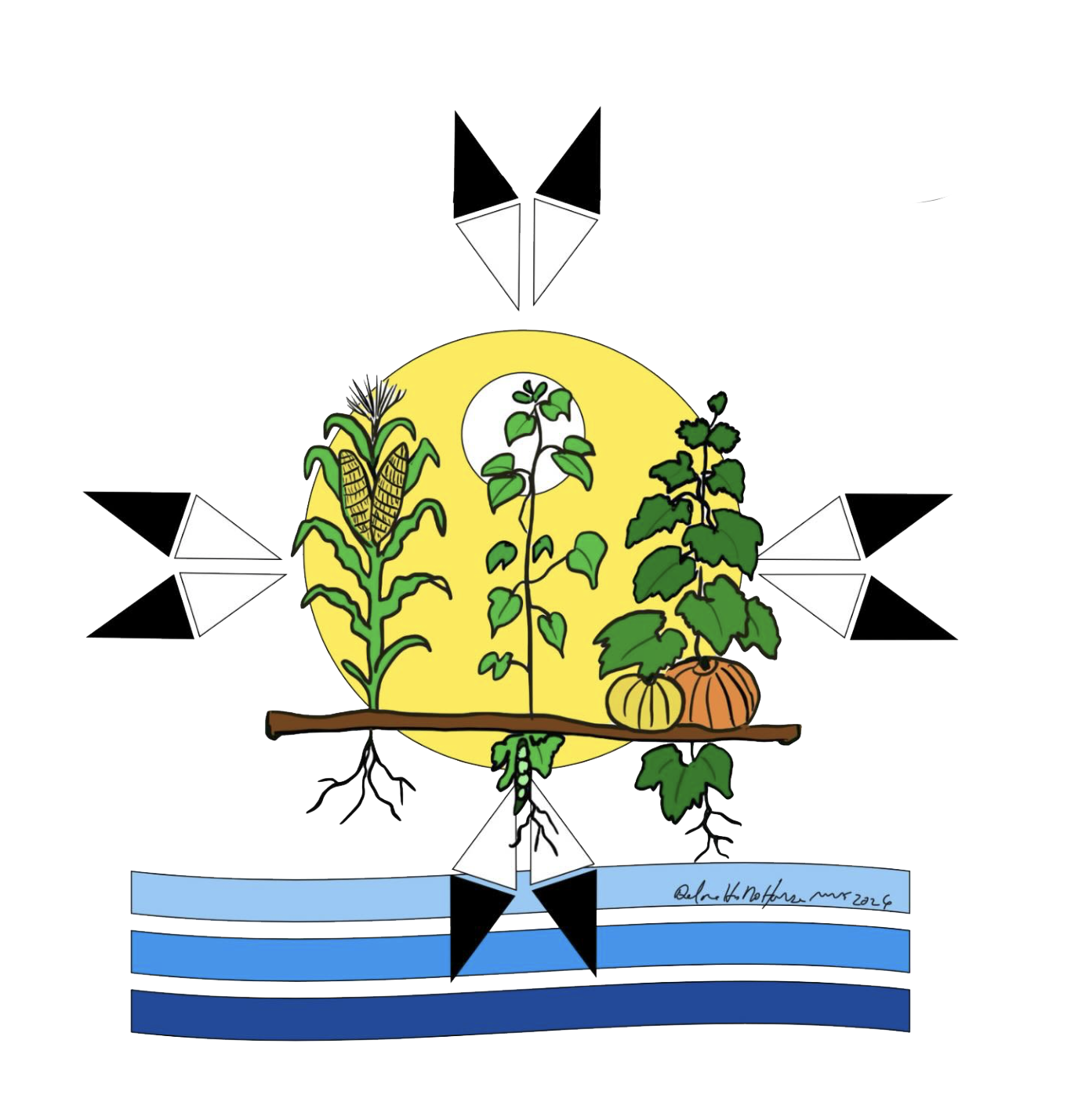
The food grown, harvested, and eaten at each site is chosen in relationship to the community's food ancestry — taro, salmon, three sisters, breadfruit, wild rice, ancestral grains. Food memory is nervous system memory.
04
IP and economic sovereignty
All intellectual property, revenue, land relationships, and organizational structures developed at a Wōžu site belong entirely to that community. No licensing. No royalties. No central extraction of community-generated value.
05
Site-specific ceremony
The ceremonies, seasonal markings, grief rituals, and celebration practices at each site emerge from the community's own spiritual and cultural traditions — not from a standardized "healing program" curriculum imposed from outside.
06
Community-defined success
Each site defines what healing looks like for its own community. The network provides shared metrics for contributing to collective knowledge — but what constitutes a good life, a healed person, and a restored relationship with land is determined entirely within the community itself.
Five gardens · Ten years · One living network

Each site is complete.
The network makes it
more powerful.

Mycelium doesn't have a headquarters. Each node is sovereign and self-sustaining — and the network carries nutrients, information, and resilience across the whole. The Wōžu network is currently rooted at Star Bear Ranch in Elbert, Colorado, with four additional gardens open for application from Indigenous-led and Indigenous-partnered communities — building outward over a 10-year horizon, with the framework open for any community to replicate beyond it.

Garden 1 · Live · Prototype
Elbert, Colorado · Star Bear Ranch
High Plains · Indigenous-led · 65 acres · Year 1
The living prototype, led by Myranda Pretty Owl. Prairie restoration, animal program rotational grazing, Capacity Care residential program, Spirit Realms AR, community events, and a full earned income architecture across 8 categories. Everything that follows is built on what is learned here.
Garden 2 · Applications Open
Open for Application
Indigenous-led / Indigenous-partnered community
Open for application from communities ready to carry the model forward. Pine Ridge and other Indigenous-led communities are interested partners through ongoing relationships.
Garden 3 · Applications Open
Open for Application
Indigenous-led / Indigenous-partnered community
Open for application from communities ready to carry the model forward. Selected based on relationship, readiness, and community need.
Garden 4 · Applications Open
Open for Application
Indigenous-led / Indigenous-partnered community
Open for application from communities ready to carry the model forward. Selected based on relationship, readiness, and community need.
Garden 5 · Applications Open
Open for Application
Indigenous-led / Indigenous-partnered community
Completing the five-garden network. Applications open now — community and practitioner inquiries welcome as we build toward launch.
Get involved

The land is calling.
Here are the ways in.

There is no single right entry point. Each path below serves the network differently — and the network needs all of them.

🌱
Start a site
You have land — or access to it. You have community. You have knowledge — whole or fractured. Connect with the Wōžu network to begin the framework adaptation process for your terrain and culture.
🤝
Partner your organization
Health systems, tribal governments, universities, environmental organizations, and funding bodies can partner with Wōžu sites to support community-led healing without replacing community leadership.
📚
Apply for Capacity Care
The Capacity Care residential program is currently in development. Applications are open now — for individuals, communities, and practitioners who want to be considered when the program launches.
💰
Fund the network
Philanthropic and impact investment in Wōžu sites funds community-sovereign healing — not a centralized organization. Every dollar stays with the community and the land that generated the need for it.
🔬
Contribute research
Researchers in neuroscience, ecology, public health, anthropology, and Indigenous studies can contribute to the living body of evidence underlying the model — and learn from what each site produces.
📡
Amplify the story
Journalists, documentarians, artists, and cultural workers can help carry the story of what land-based healing actually looks like — and why it is the response the world needs, not just the communities most visibly wounded.
The land is
everywhere.
So is the wound.
Wōžu is the response — not a program, not a brand, not a charity. A living framework for any community ready to return to its land and heal.
Any terrain
Any culture
Any biome
Community sovereign
Neurobiologically grounded
Economically self-sustaining